Participating universities

KDD’26 Tutorial

Data Valuation for Generative Models

Room: 402A | Sunday, August 9, 2026 9:00 AM~12:00 PM

Held in conjunction with the ACM SIGKDD 2026

Abstract

The rapid advancement of generative AI has fundamentally shifted machine learning from a discriminative paradigm to a generative one. This shift has rendered traditional data valuation methods, predominantly designed for discriminative models, inadequate for assessing the value of data in generative tasks. The field now faces four fundamental challenges: (1) Comprehensive data valuation measures customized for generative AI tasks, (2) Scalable data valuation adapted to the complexity of generative models, (3) Coherent data valuation aligned across all value propagation stages, and (4) Practical data valuation mechanisms for fair and trustworthy rewards. To address these challenges, this tutorial presents the first systematic synthesis of emerging solutions, organized around a four-step framework: defining value through generative utility functions, computing value with scalable algorithms, refining value via temporal and multi-stage attribution, and distributing value through trustworthy incentive mechanisms. For each step, we present the key design ideas, review cutting-edge approaches, and outline future directions. Our goal is to equip participants with a structured understanding of this rapidly evolving landscape. By the end of the tutorial, attendees will gain a clear grasp of the four fundamental challenges, a practical understanding of the major solution families, and a vision for future research toward a unified data valuation framework for the generative AI economy.


Schedule

TitleSpeakerTime
IntroductionJian Pei30 minutes
Step 1: Defining ValueZhenzhe Zheng30 minutes
Step2: Computing ValueZhenzhe Zheng30 minutes
Step3: Refining ValueBingxue Zhang30 minutes
Step4: Distributing ValueFeida Zhu30 minutes
SummaryJian Pei30 minutes

Tutorial Outline

Introduction

  1. Data Valuation
  2. Generative AI
  3. Why Data Valuation Matters for Generative AI
  4. Challenges
    • Data Valuation Measures in Generative Tasks
    • Scalable Data Valuation in Generative Tasks
    • Data Valuation across Value Propagation Stages
    • From Data Valuation to Fair and Trustworthy Rewards
  5. A Four-step Framework

Step 1: Defining Value

  1. Design Ideas
    • From Discriminative to Generative Quality
    • From Objective to Human Perception
  2. Major Approaches
    • Probabilistic & Distribution-based Methods
    • Perceptual & Semantic Similarity Methods
  3. Future Directions

Step 2: Computing Value

  1. Design Ideas
    • Beyond Brute-force Retraining
    • Beyond Hessian Matrix Calculations
  2. Major Approaches
    • Training-efficient Valuation Methods
    • Second-order-free Attribution Methods
  3. Future Directions

Step 3: Refining Value

  1. Design Ideas
    • From Static to Dynamic Attribution
    • From Single-stage to Multi-stage Tracking
  2. Major Approaches
    • Timestep-aware Attribution Methods
    • Stage-decoupled Attribution Methods
  3. Future Directions

Step 4: Distributing Value

  1. Design Ideas
    • Beyond Theoretical Fairness
    • Beyond Valuation Scores
  2. Major Approaches
    • Manipulation-resistant Allocation Methods
    • Trustworthy Settlement Methods
  3. Future Directions

Summary

  1. Challenges and Approaches Recap
  2. Roadmap for Future Directions

Presenters

Bingxue Zhang
Bingxue Zhang received her Ph.D. from Ecole Centrale de Lyon, France. She is an associate professor at the University of Shanghai for Science and Technology. Her research actively explores blockchain technology, human-computer interaction, and data analytics, with a particular interest in AIGC applications. She has served as a Visiting Research Associate Professor at the National University of Singapore, participating in national-level projects on AI-driven finance and blockchain scalability. She has also served the academic community in roles such as Associate General Chair and Publicity Chair for conferences such as DASFAA, KDD, etc.
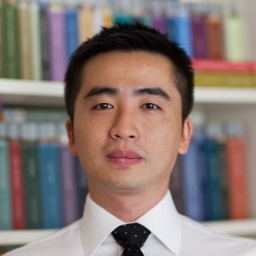
Dr. Feida Zhu
Dr. Feida Zhu is an associate professor and the associate dean of the School of Computing and Information Systems at Singapore Management University (SMU). His research centers on large-scale data mining and machine learning, with a particular focus on data asset, governance, and pricing, aiming to advance their applications in business, finance, and consumer innovation. He has led impactful academic service roles, serving as the General Co-Chair for two premier data conferences: SIGKDD 2021 in Singapore and IEEE ICDM 2018—one of the most successful editions in its history. At SMU, he has also provided academic direction for several analytics labs, translating research into practical business solutions.
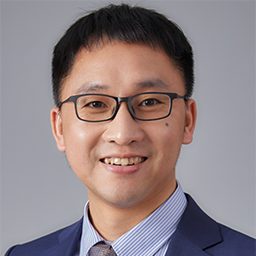
Dr. Zhenzhe Zheng
Dr. Zhenzhe Zheng is a Professor at Shanghai Jiao Tong University. His research focuses on the intersection of economics, learning, and systems, with a particular interest in game theory, machine learning, mobile computing, and their applications in Agentic AI systems. He obtained his Ph.D. from Shanghai Jiao Tong University and conducted research as a visiting scholar and postdoctoral researcher at the University of Illinois Urbana-Champaign. He has received several prestigious awards, including the China Computer Federation Excellent Doctoral Dissertation Award, the Google PhD Fellowship, and the Microsoft Research Asia PhD Fellowship. He actively contributes to the academic community by serving on the Technical Program Committees of ACM MobiHoc, ACM SIGKDD, IJCAI, etc.
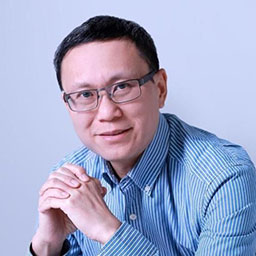
Dr. Jian Pei
Dr. Jian Pei is a professor at Duke University. He is a leading researcher in the general areas of data science, big data, data mining, and database systems. His expertise is on developing effective and efficient data analysis techniques for data-intensive applications. He is recognized as a Fellow of ACM for his “contributions to the foundation, methodology and applications of data mining” and as a Fellow of IEEE for his “contributions to data mining and knowledge discovery”. He was Chair of SIGKDD. Dr. Jian Pei has been the General Co-Chairs and PC Chairs of a good number of top conferences including KDD, VLDB, ICDM, etc.

Contributors

Yang Shi
Yang Shi is a PhD student in Control Science and Engineering at the School of Optical-Electrical and Computer Engineering, University of Shanghai for Science and Technology. His research interests include generative AI technologies, data valuation, and blockchain systems. He has served as a Web Co-Chair for DASFAA 2025.
Chengyu Zhang
Chengyu Zhang is a Master’s student at the School of Optical-Electrical and Computer Engineering, University of Shanghai for Science and Technology, supervised by Dr. Bingxue Zhang. His research interests primarily focus on data valuation and data selection.

Contact

For any questions regarding this tutorial, please reach out to Bingxue Zhang via zhangbingxue@usst.edu.cn.